How Success Plans Use Customer Data to Drive Adoption and Value Discussions
A look at the AOA, VOA and ERG reports I designed for Success Plan customers and how we use them in adoption and value discussions.


If you can’t measure it, you can’t manage it.
When we sit down with a customer to talk about adoption, the conversation usually starts with their plans, such as the modules they want to roll out and the processes they want to improve. Those plans matter, but they don’t always match what is actually happening in the system. The customer’s own usage data is a better place to start, and it gives both sides the same facts to work from.
Helping customers adopt what they have licensed and get measurable business value from it is a big part of what SAP Success Plans are for.1 To support those adoption and value discussions, I designed three capabilities and collaborated with others to build them. They are the Adoption Opportunity Assessment (AOA), the Value Opportunity Assessment (VOA) and Enhanced Release Guidance (ERG).
All three are AI-generated presentations built on SAP Business Technology Platform with process automation and analytics, and each one is paired with a session where a specialist walks the customer through the insights.
How each one works
Adoption Opportunity Assessment (AOA)
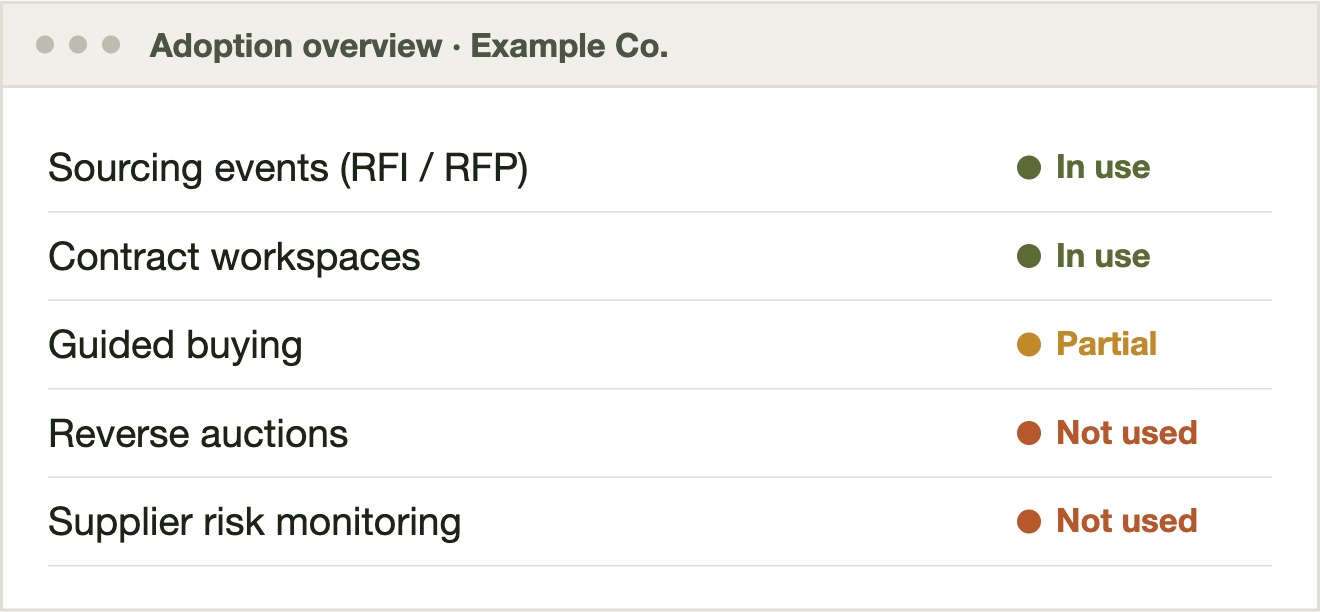
The AOA starts with usage data extracted from the customer’s system. After we analyze that data, a presentation is generated automatically that shows what the customer is using and what they are not using, including the value of the features they haven’t adopted yet.
It recognizes the customer for the leading practices they have adopted and highlights the gaps in their adoption.
It outlines how the key features across the suite are being used and pinpoints the capabilities the customer owns but underutilizes.
Value Opportunity Assessment (VOA)
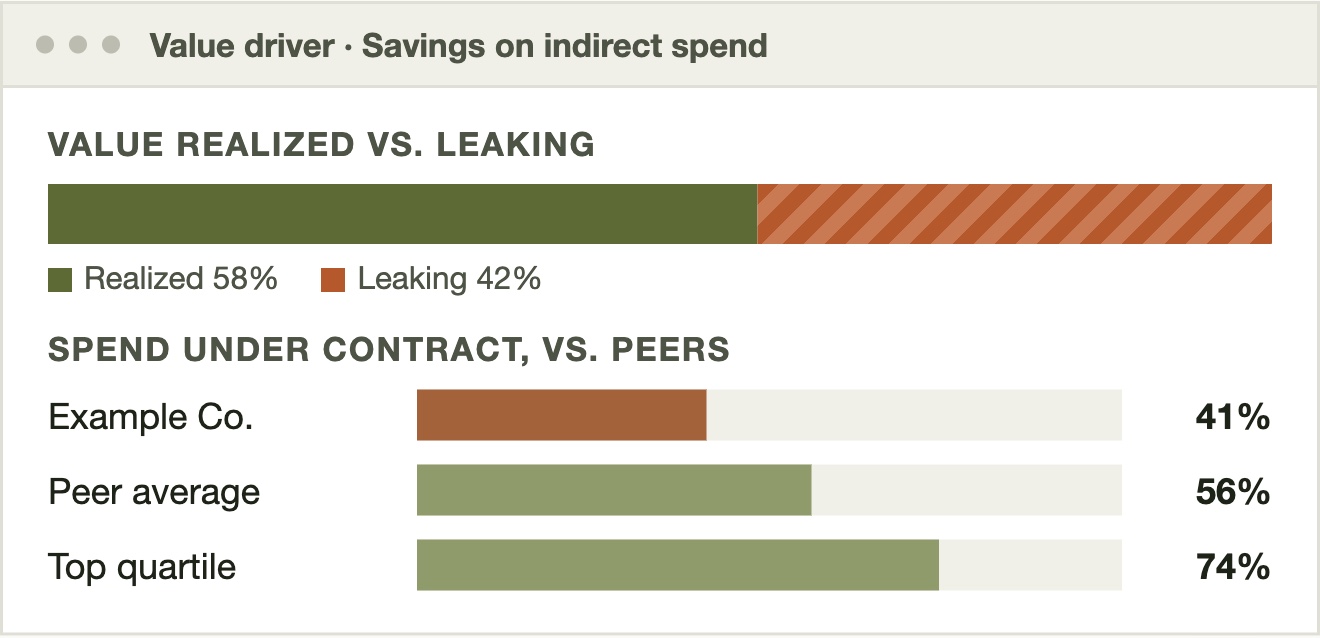
The VOA is similar to the AOA, but instead of focusing on features it starts with value drivers. For the value driver the customer selects, it shows the value being realized and the value being leaked based on the features that directly correlate to that driver.
For example, Sourcing Savings on Indirect Spend looks at RFP, RFI and Auctions in Sourcing along with Service Procurement in Purchasing to track utilization and value realization.
The VOA also goes beyond whether a feature is switched on. Benchmarking is an indication of the quality of adoption, so the VOA benchmarks the customer against their peers and shows them where they stand. And it teaches the customer how to track that value in their own solution, so the conversation doesn’t end when the report does.
If the customer doesn’t own a module, its features are grayed out, so the view stays focused on what they can act on. Each value driver includes one to four benchmark KPIs, and every benchmark comes with recommendations.
Enhanced Release Guidance (ERG)
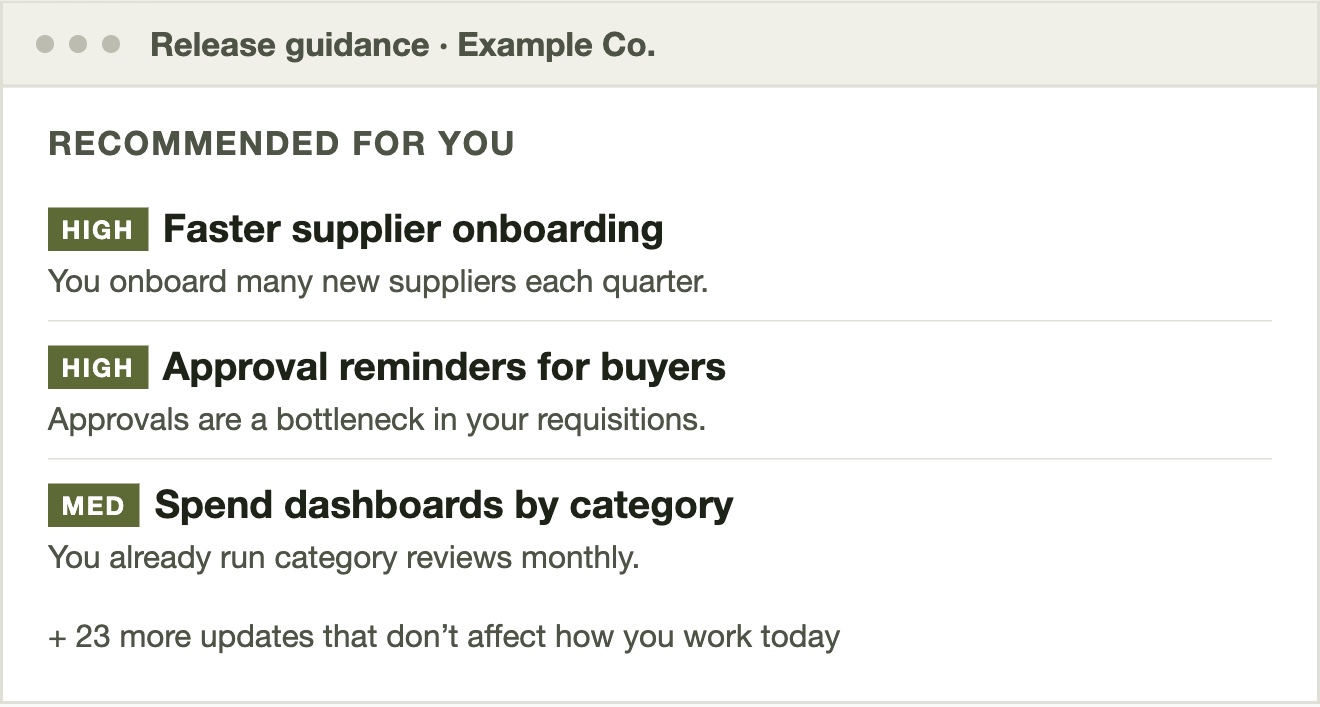
We built ERG for the Finance and Spend Management group. It took the technical release notes from the What’s New Viewer2 and mapped them to common business language.
Before ERG, preparing a customer for a release took about three hours per customer each quarter, with a real risk of missing important features, including ones that switch on automatically.
The report is dynamic and highlights the features that would be beneficial for each customer based on their usage.
It gives customers a starting point amid an overwhelming amount of release information: the features most relevant to their setup, platform changes that could affect their operations, security updates they need to know about, and new product areas that could add value.
To build it, we trained a machine-learning model on the product’s help documentation to map each release note to the modules customers recognize, and validated the output by hand until it reached about 80% accuracy. Generative AI is the next step: matching release notes not just to modules, but to the specific features each customer uses.
Using them in Success Plan discussions
In a Success Plan, these reports give the customer and the SAP team a common starting point. We can start by recognizing the leading practices the customer has already adopted and then walk through the gaps and the value tied to them. The VOA keeps the discussion connected to the business outcomes the customer cares about, like savings on indirect spend. ERG does the same for new releases by showing customers which new features were worth their attention, in language their business users understood.
Everyone involved benefits. Customers find features they own but don’t use, unlock new value and improve user adoption and consumption. Customer success teams prepare adoption, consumption and value discussions faster, with consistent messaging, and become trusted advisors. Delivery teams standardize their recommendations and scale them across every customer and region.
All three were designed with the same goal in mind, which is to give customers a clear view of their adoption and value using their own data. When the customer and the SAP team are looking at the same data, it is much easier to agree on the next steps.
From reactive to proactive
The reports move the customer from Reacting to signals to proactive engagement with quantifiable metrics.
Where I would like to see this go is into the product itself. A customer notices they are slightly below average on a metric they thought they led, and a button to speak with an expert is right there. An administrator configures approval rules that don’t follow leading practice and is told in the moment, the same way a system flags a weak password. My shorthand for it: democratize data, monetize expertise.
Sources
- “Advanced Success Plan.” SAP, accessed Oct. 5, 2026.
- “Release Readiness for SAP Procurement Solutions.” SAP Community, accessed Oct. 5, 2026.